Wednesday, October 2, 2013

Tay Gavin Erickson Lecture Series: The Role of Parents in Supporting their Children's Achievements


Jacquelynne Eccles, Ph.D.  
McKeachie-Pintrich Distinguished University Professor of Psychology and Education, Senior Research Scientist at the Institute for Social Research
University of Michigan

Over the past 30 years, Dr. Eccles has conducted research on a wide variety of topics including gender-role socialization, teacher expectancies, classroom influences on student motivation, and social development in the family and school context. Dr. Eccles has contributed to the field of child psychology throughout her career. In the 1990s, she served as Chair of the Advisory Committee for the Social, Behavioral and Economic Directorate at the National Science Foundation, and Chair of the MacArthur Foundation Research Network on Successful Pathways through Middle Childhood. She was the Associate Editor of the journal Child Development and editor of the Journal for Research on Adolescence. She was also the past president of the Society for Research on Adolescence, has held leadership roles at the American Psychological Association, and has and has served on the faculty at Smith College, the University of Colorado, and the University of Michigan. Her work has been honored by several prestigious awards including the Kurt Lewin Memorial Award from the Society for the Psychological Study of Social Issues. Finally, she is a member of the National Academy of Education a World Scholar at the University of London, and Visiting Professor at the University of Tubingen, Germany.

This lecture is sponsored by Center for Research on Families' Tay Gavin Erickson Lecture Series. The Center for Research on Families (CRF) is an endowed interdisciplinary research center in the College of Social and Behavioral Sciences and College of Natural Sciences at the University of Massachusetts Amherst.  The Tay Gavin Erickson Lectures Series brings internationally recognized speakers with expertise in family research to campus each year. The lecture series began in 1999 through an endowment established in memory of Tay Gavin Erickson. The lecture is co-sponsored by the Psychology Department Research Mentoring Group Speaker Series which is supported by the UMass Amherst Center for Teaching & Faculty Development's Mutual Mentoring Initiative, funded by The Andrew W. Mellon Foundation.


Tuesday, October 1, 2013

The Fortnightly Lunch Series: Dr. Aline Gubrium


The Children, Families, and Schools Concentration of the College of Education

proudly present

The Fortnightly Lunch Series

Please join us for

“WOAA!: Women Organizing Across Ages for Justice through Participatory Visual Media Making"

Wednesday, November 6
11a.m. – 12 p.m.
Furculo Hall, Room 22

   
Aline C. Gubrium, Ph.D.
Associate Professor in the Department of Community Health Education

Dr. Gubrium’s research uses participatory, digital, visual, and narrative methods to study the sexual and reproductive health knowledge and decision-making of marginalized women and youth. As a major methodological innovation, she uses digital storytelling to engage research participants in reflecting on sexuality, reproductive health, and related aspects of lived experience. From early research with African-American women living in a southern rural community, to work with women using Depo-Provera contraception and more recent projects working with Latino/a youth to address barriers to sexual communication and sexuality education, the driving question across the board is how the participants view their sexual and reproductive health experiences, in particular, how they make sense of, respond to, and confront the many influences that shape their sexuality. 

Wednesday, September 25, 2013

In D.C., Where Universal Free Preschool Is Becoming the Norm


In D.C., Where Universal Free Preschool Is Becoming the Norm

Last winter, my husband and I almost moved back to Brooklyn with our only child. We got as far as hiring movers and boxing up our home. Instead, we stayed in Washington, D.C., and achieved my long-nagged-at dream of having child No. 2. A big reason for this turnaround? Universal preschool.
Not just pre-K for 4-year-olds, as in Oklahoma’s widely praised program, or for poor children, as President Obama has proposed. Preschool that is (at least theoretically) for everyone, starting at age 3. That’s what we get in D.C.: five days a week, for nearly 10 months a year, from 8 a.m. to 3:15 p.m., my taxes pay for my toddler’s education.
We live on Capitol Hill, which has one of the greatest concentrations of elementary schools in the District, and I often wonder if my neighbors appreciate our luck. Who else has the luxury of sending a 3-year-old to school free? Still, every spring, when the preschool lottery results come in, the listserv explodes with parents raging about their 3-year-old’s not getting into their top-choice or in-bounds school. God forbid they have to drive 18 blocks to the closest acceptable charter school!
Hello? I want to reply to every “Waitlist Woes” subject heading. Just across the river in Virginia, Loudoun County recently put off implementing full-day kindergarten. And while it’s true that there still aren’t enough spots for every 3-year-old in the District, the summit is certainly in sight. This spring, only about 66 percent of applicants received a spot in District of Columbia Public Schools’ early-childhood program, but there are an additional 65 charter schools with 3-year-old classes. In my empirical experience, if you can drive, and you’re open to a less-competitive program, you can almost always find a spot.

A year later, I still haven’t gotten over how remarkable that is. When you have young children, it’s hard to imagine a time when you won’t spend much of your income on rearing them. There are the diapers and the gear and the batteries for all those educational toys, but mostly there’s the child care. The income-halving, savings-draining, vacation-precluding child care.
But what if the years of shelling out those outrageous sums were three instead of five? Trust me, it’s a big difference. For three months this fall, between my 3-year-old’s move to public school and the birth of my second child, I remembered what the term “disposable” meant when preceded by “income.”
That’s why we did it — to save money. Despite misgivings about uprooting our son from his fancy federal day-care center, we gave the D.C. public school a chance partly because the facilities were nicer, partly because the commute was nonexistent, but mostly because it was free.
Unexpectedly, another big benefit soon emerged: My son was learning much more at preschool than he had at day care. That’s because — surprise, surprise — his public-school teachers are exponentially better educated and (see any causality here?) far better compensated. The average starting salary for a D.C.P.S. elementary-school teacher, even at the early-childhood level, is just over $50,000. The average salary of a day-care provider is $19,300.
I’d cringe through the misspellings and grammatical errors riddling the “My Day” reports from day care, where only one teacher I knew of had a bachelor’s degree. My son’s D.C.P.S. teacher is close to getting her master’s, and she tosses off terms like “phonemic awareness” between reminding the students not to insert live spiders into their nostrils.
The diversity of the school has also been instructive. The 3-year-old classes are about half-African-American, half-white, with some Hispanics and Asians here and there — a solid introduction, for my half-Jewish quarter-Indian offspring, to America in the Age of Obama. Parents are cancer researchers and vet techs and government lawyers and aspiring fireworks-stand operators. Some kids at the school live in million-dollar row houses; some live in homeless shelters.
While these disparities have stirred some tensions among the adults, the kids have taken no notice, or not yet anyway. And though I’d always liked my fellow day-care parents’ high-powered Ivy-burnished résumés, I like even more how comfortably my now-4-year-old can talk about race in a neighborhood that was all but burned to the ground during the 1968 riots.
I know that universal preschool wasn’t started for families like mine. D.C. instituted it for the same reasons President Obama proposed it: to close the so-called achievement gap, and to prepare low-income children to enter kindergarten on the same level as their higher-income counterparts.
I also understand that with or without preschool, my son still has long-term educational advantages over his classmate who had never seen the letter “J” before starting school. Will those extra two years in school improve that child’s prospects in life? I’m not such a liberal fantasist to claim preschool will make all the difference. But from what I’ve observed of his progress at pickup, it certainly hasn’t hurt.
It hasn’t hurt my cohort, either. In the day-to-day, paycheck-to-paycheck calculations that we working parents are constantly performing, free school from age 3 makes life a lot easier. Without it, my husband never would’ve consented to child No. 2.
As we push the stroller around the Hill, I point out how many professional families have three children — far more than in any of the other expensive urban centers where we’ve lived. “It’s all because of the free preschool,” I say. “If you’re only paying for child care for three years per child, it’s way more reasonable to consider a third.”
My husband always shakes his head balefully: “Do NOT get any ideas.”

Laura Moser is a ghostwriter and the co-author of four young-adult novels. She writes frequently for the Off Duty section of The Wall Street Journal. You can join her scanty followers on Twitter: @lcmoser.

UMass Amherst study finds daytime naps enhance learning in preschool children


UMass Amherst study finds daytime naps enhance learning in preschool children

Published: Tuesday, September 24, 2013 - 10:34 in Psychology & Sociology

Related images
(click to enlarge)

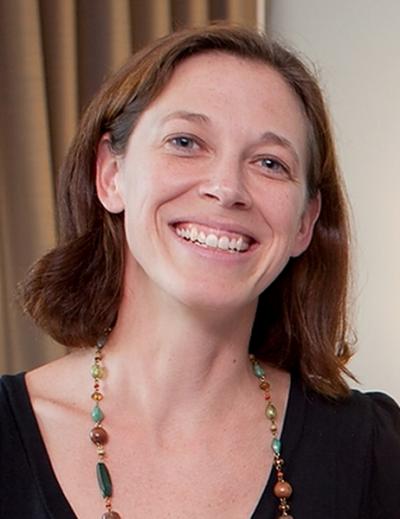
This is Rebecca Spencer.
UMass Amherst
Sleep researchers at the University of Massachusetts Amherst today offer the first research results showing that classroom naps support learning in preschool children by enhancing memory. Children who napped performed significantly better on a visual-spatial task in the afternoon after a nap and the next day than those who did not nap. Research psychologist Rebecca Spencer, with students Kasey Duclos and Laura Kurdziel, say their results suggest naps are critical for memory consolidation and early learning, based on their study of more than 40 preschool children. "Essentially we are the first to report evidence that naps are important for preschool children," Spencer says. "Our study shows that naps help the kids better remember what they are learning in preschool." Results appear in the current issue of Proceedings of the National Academy of Sciences.
With an increase in publicly funded preschools, parents and administrators have questioned the usefulness of the naps. "There is increased public funding for preschools and increased enrollments in preschools due to a surge of research showing the long-term health and educational benefits of early education. But there was no research on napping so they were a target for elimination in order to make more time for more learning. We offer scientific evidence that the midday naps for preschoolers support the academic goals of early education."
For this study, Spencer and colleagues recruited 40 children from six preschools across western Massachusetts. The researchers taught children a visual-spatial task similar to the game "Memory" in the mornings. In this game, children see a grid of pictures and have to remember where different pictures are located. Each child participated in two conditions.
In one condition, the children were encouraged to nap during their regular classroom nap opportunity. Naps lasted an average of 77 minutes as recorded by observers in the classroom. In the second condition, children were kept awake for the same amount of time. Memory for the game was tested after the nap and wake conditions and again the following day to see whether nighttime sleep affected performance.
Children forgot significantly more item locations on the memory test when they had not taken a nap (65 percent accuracy), compared to when they did nap (75 percent accuracy). Thus following a nap, children recalled 10 percent more of the test locations than when they had been kept awake.
"While the children performed about the same immediately after learning in both the nap and wake conditions, the children performed significantly better when they napped both in the afternoon and the next day," the authors summarize. "That means that when they miss a nap, the child cannot recover this benefit of sleep with their overnight sleep. It seems that there is an additional benefit of having the sleep occur in close proximity to the learning."
To explore the effect of sleep stages and whether memories were actively processed during the nap, the researchers recruited an additional 14 preschoolers who came to a sleep lab and had polysomnography, a record of biophysiological changes, during their average 73-minute naps. Here Spencer and colleagues noted a correlation between sleep spindle density, that is activity associated with integrating new information, and the memory benefit of sleep during the nap.
"Until now, there was nothing to support teachers who feel that naps can really help young children. There had been no concrete science behind that," the neuroscientist says. "We hope these results will be by policy makers and center directors to make educated decisions regarding the nap opportunities in the classrooms. Children should not only be given the opportunity, they should be encouraged to sleep by creating an environment which supports sleep."
The authors call for preschools to develop napping guidelines and further research on how to protect and promote naptime for young children to enhance their learning.

Source: University of Massachusetts at Amherst


Tuesday, September 24, 2013

An Education in Equality


‘An Education in Equality’

An Education in Equality: Filmed over 13 years, this short film presents a coming-of-age story of an African-American boy who attends an elite Manhattan prep school.


  • FACEBOOK
  • TWITTER
  • GOOGLE+
  • SAVE
  • E-MAIL
  • SHARE
  • PRINT
  • REPRINTS

When our son Idris was 4 years old, he was accepted to the Dalton School, a prestigious private school in Manhattan. Idris would become one of only a few black boys in a kindergarten class of about 90 students, where tuition rivaled that of private colleges. We decided to document this new world, following Idris over 13 years through graduation. (The story of Idris and one of his close friends became our feature-length documentary “American Promise,” from which this Op-Doc video is adapted.) What began as an exploration of diversity in New York’s elite private-school world grew into a story that touches on larger themes of identity, race and class in American society.

A forum for short, opinionated documentaries, produced with creative latitude by independent filmmakers and artists.
Opinion Twitter Logo.

Connect With Us on Twitter

For Op-Ed, follow@nytopinion and to hear from the editorial page editor, Andrew Rosenthal, follow@andyrNYT.

Readers’ Comments

In this Op-Doc video, we have tried to encapsulate the journey of our son — a boy who comes of age with many privileges and many challenges — as well as our own. We sought to protect Idris from the African-American male achievement gap in education, where boys like him, regardless of their socioeconomic status, are confronted with experiences that affect their academic performance, as compared to their white counterparts. Among these are negative perceptions (which some researchers call “implicit bias”) about black boys’ capabilities in the classroom. There are also more direct threats, like the fear of being “stopped and frisked” by the police, or being stared at on the streets of the Upper East Side of Manhattan. Idris also faced our own anxieties, as we worried about his academic performance. And he faced pressure near home in Fort Greene, Brooklyn, an economically and racially diverse neighborhood where children criticized him for “speaking like a white boy” as a result of attending Dalton.
Over time, our son grew more comfortable navigating his two worlds. And we became more comfortable with the above challenges. Dalton evolved as well: in 2013, nearly 50 percent of the entering kindergarten class comes from minority (nonwhite) groups. But numbers alone are not enough. The work continues for all those involved in making sure education remains a tool for greater opportunity and success.
This video is part of a series by independent filmmakers who have received grants from the Ford Foundation and additional support from the nonprofit Sundance Institute.

Joe Brewster, trained as a physician, and Michèle Stephenson, trained as a lawyer, have produced and directed feature documentaries and narrative films. Their forthcoming documentary, “American Promise,” won a Special Jury Award at the 2013 Sundance Film Festival and will be broadcast on the PBS series POV in 2014.